

Details
URBANSELF: Urban Self-Organisation and Public Life in Europe, India and China
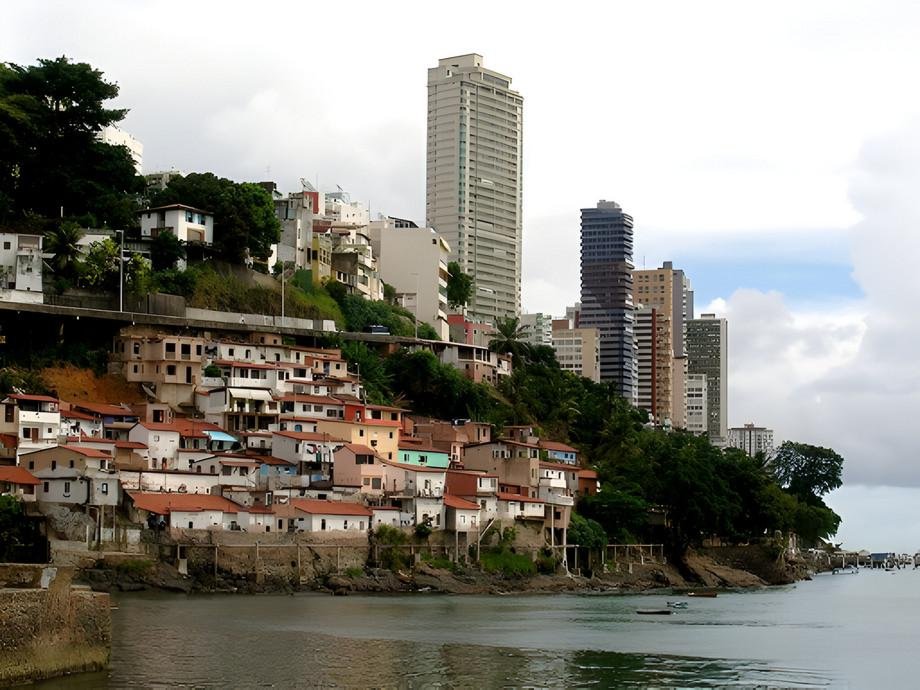
The objective of URBANSELF is to bring together and integrate competences on urban processes in Europe, India and China with a specific focus on urban self-organisation and how this can contribute to the development and enhancement of public dialogue within and between the three participating areas. Thus as well as seeking to further the role of civil society within Europe, India and China, URBANSELF intends to strengthen the North-South dialogue.
Towards real citizen participation
In the "urban age" this is of particular relevance, because urban problems are increasingly global challenges and it is vital to share knowledge and understanding of these challenges and how to address them. The bringing about of change in governance, policy and politics aimed at enhancing the role of the citizens, and their self-organising activities, will facilitate the rise of organisations that enable the articulation of interests and the creation of supporting socio-economic practices. Accordingly, urban governance has to interface with these citizen-based organisations. The support of self-organisation is the crucial process for such a transition towards real citizen participation.
Consequently, self-organisation is a necessity for urban sustainability. The key objective is to understand these forms of organisation through comparative discussion and knowledge transfer of existing research on European cities and rapidly growing cities in India and China. This then allows for empirically founded theoretical conclusions which in turn will provide the basis to identify innovative approaches to urban challenges from an actor-oriented perspective. The scientific results of urban selforganisation and associated developments in the public sphere will be addressed to the relevant stakeholders (local organisations, administration, and politicians).
Funding and participation
The European Commission funded the project under the 7th Framework Programme through Marie-Curie-Action IRSES (International Research Staff Exchange Scheme) over a period of three years. Rüdiger Korff, Professor for Southeast Asian Studies at the University of Passau, and Dr. Eberhard Rothfuß coordinated the project. Partners were the Technical University of Lisbon (Portugal), the University of Groningen (Netherlands), and the Metropolitan Research Institute (Hungary). The Cities Research Centre in Bristol (UK) acted as associated organisation. Academic Partners in Asia were the Yunnan Participatory Research Association (China) and the University of Madras (India).
| Principal Investigator(s) at the University | Prof. Dr. Rüdiger Korff (Lehrstuhl für Südostasienstudien) |
|---|---|
| Project period | 01.07.2011 - 30.06.2014 |
| Source of funding |  Europäische Union (EU) > EU - 7. Forschungsrahmenprogramm (7. FRP) > EU - 7. FRP - Marie Skłodowska-Curie Actions (MSCA) > EU - 7. FRP - MSCA - International Research Staff Exchange Scheme |
| Projektnummer | 268931 |
| Themenfelder | Geistes- und Sozialwissenschaften |

 Share this page
