

Details
Tree Ring Isotopes II
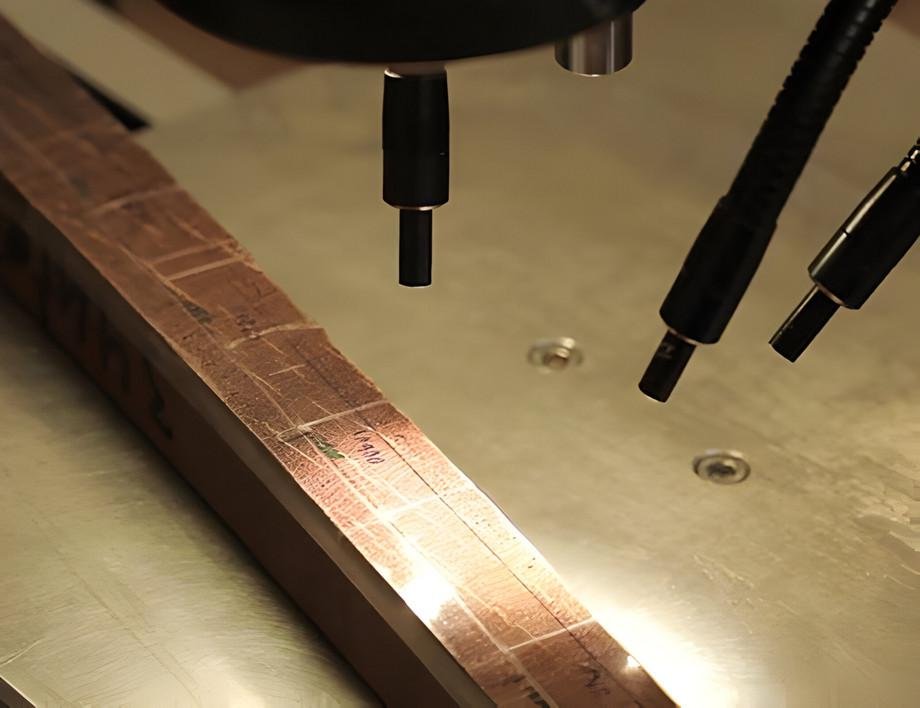
The world’s tropical forests are not only a central component of the terrestrial carbon cycle but also a key part of the natural water cycle. It is, therefore, crucial to find out what effects an increasing carbon concentration and changing climatic conditions have on the growth of tropical trees and their water-use-efficiency (WUE), as any changes in their carbon uptake and water release will inevitably have global effects. One question that remains unanswered is this: does a CO2-richer atmosphere lead tropical trees to bind more carbon at unchanged water consumption or do they take up less water while carbon gain stays constant?
Thus far it has not been possible to carry out experiments in natural forests involving artificially increasing the CO2 concentration in fully grown tropical trees. The only – but nevertheless cost-effective – method available for investigating the effects of climate change and the increase of CO2 on those forests is by way of a combination of dendrochronology and isotope dendrology. In order to determine WUE to calculate a tree’s carbon and water balance, a procedure is used that analyses the proportion of carbon isotopes (12C.13C) stored in a tree’s cellulose. However, this method only examines a tree’s intrinsic water-use-efficiency (iWUE), which is calculated on the assumption a of constant deficit in water vapour pressure.
The weakness of examining a tree’s iWUE exclusively is that transpiration is assumed to be constant; as a result, it remains unclear whether any given changes in WUE are caused only by the CO2 increase or at least partly by climate change effects. Variations in water loss (transpiration) during the rainy season and dry spells over the course of a year are not taken into account, thus not allowing for a realistic assessment of the actual WUE and potential consequences for the water cycle.
However, by simultaneously analysing 18O and 13C signatures together with climate data, it should be possible infer the vapour pressure deficit (i.e. saturation deficit), and arrive at a conclusion concerning the actual WUE. The research team intends to collect this data during an examination of trees of the species Cariniana estrellensis and Hymenaea courbaril, typical examples of Mata Atlantica and the tropical semi-evergreen moist forests in south-eastern Brazil, and is supposed to contribute to an understanding of the ecophysiological adaptability of tropical trees.
Sound knowledge on how vegetation will react on changing precipitation regimes, temperatures and especially the continually rising CO2 concentration in the atmosphere are key to an understanding of the potential effects of climate change in the tropics and on a global level.
| Principal Investigator(s) at the University | Prof. Dr. Dieter Anhuf (Lehrstuhl für Physische Geographie) |
|---|---|
| Project period | 01.04.2016 - 31.03.2017 |
| Website | http://univideo.uni-passau.de/2014/09/wechselwirkung-von-atmosphaere-und-vegetation/ |
| Source of funding |  DFG - Deutsche Forschungsgemeinschaft > DFG - Sachbeihilfe |
| Projektnummer | AN 214/10-2 |
| Themenfelder | Physische Geographie, Physische Geographie |

 Share this page
