The courses offered by the Chair of Exegesis and Biblical Theology form part of the teacher education programmes in Catholic Religious Education, the Bachelor’s programmes in Linguistics and Textual Studies and in Historical and Cultural Studies, as well as the Master’s programme in Caritas Studies and Values-Based Management.
In addition to a strong affinity for narrative texts and the phenomenon of pseudepigraphy, the Chair’s research focuses include cultural memory theory and the construction of early Christian identity, the Bible and economics, biblical methodology and hermeneutics, as well as university didactics.

The team led by Prof. Dr. Sandra Huebenthal will be happy to assist you. Here you can find information on contact details, office hours, and the research areas of the individual team members.
In our science communication activities, we provide information on Bible fun facts, biblical interpretations, podcasts, and events.
Sandra Huebenthal and Benedikt J. Collinet are working together with Thomas Wünsch and Christian Handschuh on a research network dedicated to religious identity and the history of memory.
An initial conference took place in May 2025 in Passau, bringing together nearly 30 participants from 12 European countries.
Further information is available on the website of the Network “Religious Identities.”
Further information can be found on our website "Networking Religious Identities".
![[Translate to Englisch:] Buchcover](/fileadmin/_processed_/3/e/csm_jew_hatred_8dc9da6249.jpg)
The experience of violence and discriminatory polemic has long been—and continues to be—a distressing reality for Jewish people. This volume focuses on anti-Jewish hostility and the forms it took in antiquity during the period of the Second Temple in Jerusalem. It brings together contributions addressing a wide range of literature from the Hellenistic and Roman periods and from diverse sources: from Jewish writings in Greek (e.g. the Septuagint and Philo) to works by Greek and Roman authors. The essays examine and analyse prejudice, resentment, and violence directed against Jews, as well as the ways in which Jewish communities responded—both pragmatically and intellectually. The historically oriented studies are complemented by an essay that relates past experiences to those of the present.
![[Translate to Englisch:] Gruppe von Menschen vor blauem Himmel](/fileadmin/dokumente/fakultaeten/geku/lehrstuehle/huebenthal/Bilder/leadimagesize.jpg)
From March 27–28, 2025, the 1st Annual Conference of the newly established Colloquium Marcianum took place at the Faculty of Protestant Theology. The congress, organized by Jun.-Prof. Dr. Jan Rüggemeier, Mag. Theol. Lara Mührenberg, B.A., and Prof. Heidrun Mader (University of Cologne) and co-chaired with Prof. Sandra Huebenthal (Passau) and Prof. Dr. Markus Lau (Chur), demonstrated the vitality of current research on the Gospel of Mark in the German-speaking world and Europe, as well as the fruitful potential of inter- and transdisciplinary dialogue with fields such as archaeology, patristics, gender studies, and literary and cognitive sciences.
A key focus of the first colloquium was on the receptions of the earliest Christian narratio. Further presentations addressed, among other topics, the question of how strongly the Gospel of Mark remains situated within an early Jewish context (“Mark within Judaism”). Prof. Dr. Jeremiah Coogan, who also delivered a lecture on March 31 at the Bonn Center for Dependency and Slavery Studies, concluded the conference with an innovative presentation on the longer ending of Mark (Mk 16:9–20) as a continuatio. The Colloquium Marcianum is planned to continue next year.
Particularly noteworthy this year was the high level of participation by early-career scholars and the active involvement of external guests from both Germany and abroad. The conference was made possible through generous funding from the Bonn TRA 5 Present Pasts.
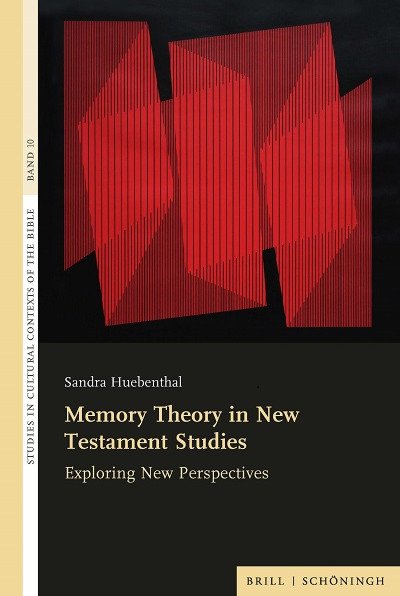
How are individual memory, the collective memory of groups, and New Testament texts interconnected? This question has shaped Sandra Huebenthal’s research for the past fifteen years. The edited volume Memory Theory in New Testament Studies: Exploring New Perspectives brings together ten of her most significant contributions, ranging from foundational hermeneutical reflections to new perspectives on intertextuality and pseudepigraphy, as well as studies engaging with patristic literature. Together, they demonstrate the considerable potential of cultural exegesis.
The volume is available in open access and can be accessed at https://brill.com/display/title/64386.















![[Translate to Englisch:] Seminarraum mit Fenstern; größere Gruppe von Studierenden und Lehrenden sitzt um einen runden Tisch](/fileadmin/_processed_/7/5/csm_Maynooth_1_fed1f09340_0a78cce1bd.jpeg)