ITZ 17
Anmeldung: Prof. Dr. Lorely French french02@ads.uni-passau.de
Generell sind die Werke von Roma und Sinti in ihren Schriften, Filmen und Kunstwerken reich an Bezügen und Bildern zur Hoffnung. Gleichzeitig tauchen immer wieder Bilder von Träumen in ihren Werken auf - seien es nun greifbare Träume, die im Schlaf auftauchen, oder metaphorische Hoffnungen für die Zukunft. Wo Hoffnung ist, kann jedoch auch die Hoffnungslosigkeit drohen. Wie hilft Hoffnung, weiterzumachen? Was können Hoffnungsbekundungen und Traumbilder in den Werken von Roma und Sinti, deren Völker eine lange persönliche und kollektive Geschichte der Diskriminierung und Verfolgung aufweisen, über die Rolle der bildenden Künste bei der Gestaltung von Utopien lehren? Wie bewahrt man Hoffnung und Träume in Situation tiefster Verzweiflung? Welche Hoffnung können die geschriebenen und bildenden Künste im Umgang mit Traumata spenden? Wie wirkt sich das Nebeneinander, mitunter sogar die krasse Gegenüberstellung von Gegensätzen Hoffnung und Hoffnungslosigkeit, Träumen und Albträumen, Utopien und Dystopien auf den kreativen Prozess aus? Letztlich möchte das Kolloquium den Optimismus, den Hoffnung durch geschriebene und bildende Künste erzeugt, nutzen, um über vergangene Gräueltaten aufzuklären und Traumata, Depressionen und Gefühle der Hoffnungslosigkeit in unserer heutigen Zeit und in der zukünftiger Generationen zu begegnen.
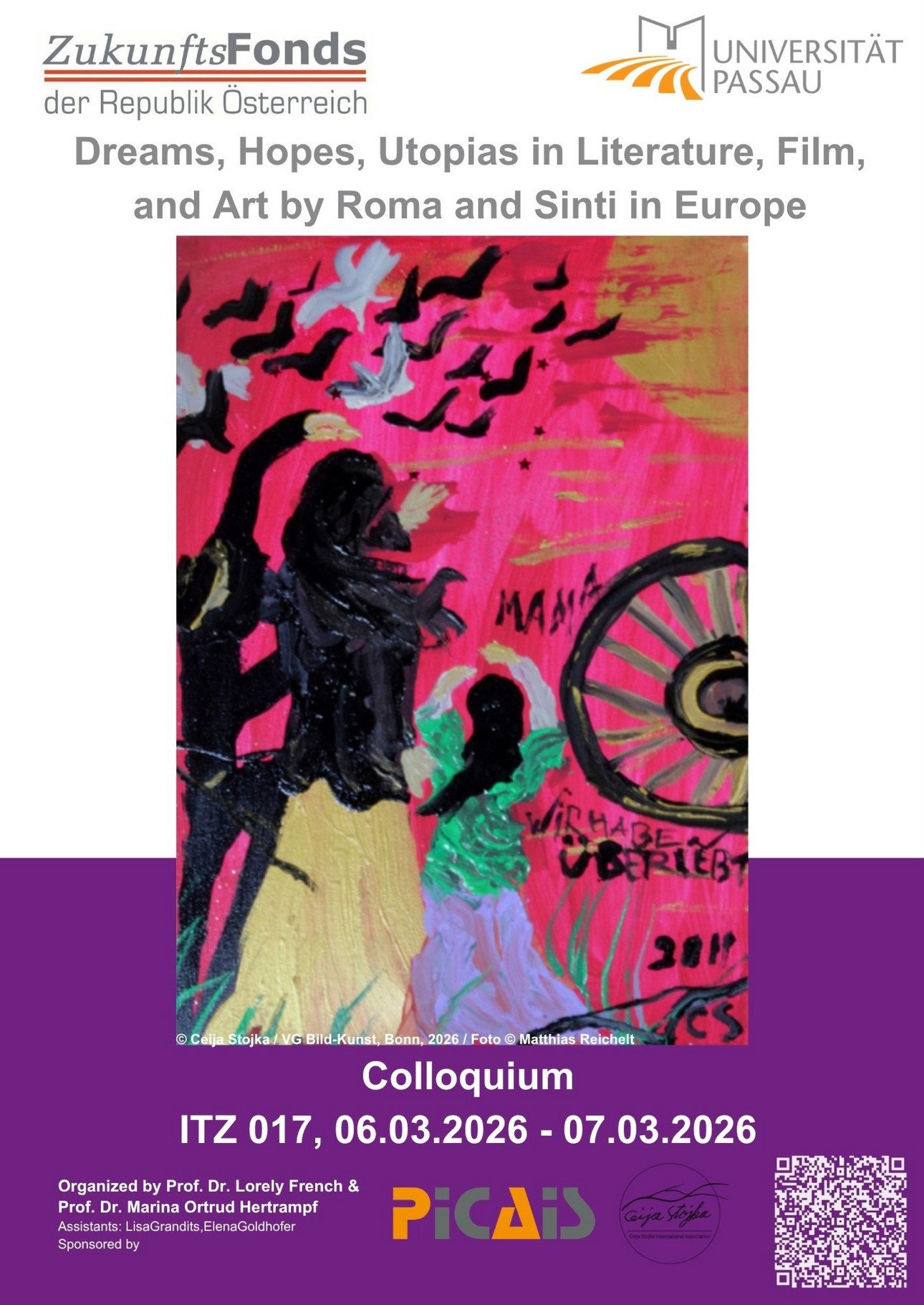
Das zweitägige Hybrid-Kolloquium am Freitag, dem 6. März und Samstag, dem 7. März 2026, bringt europäische und nordamerkanische Wissenschaftler*innen und Autor*innen aus verschiedenen Bereichen der Literatur, bildenden Kunst und darstellenden Künste zusammen, um ihre Forschungsergebnisse zu präsentieren und Ideen auszutauschen. Das Ziel ist die Entwicklung eines theoretischen Rahmens zur Interpretation der Werke von Roma und Sinti Schriftsteller*innen und Künstler*innen, die Träume, Hoffnungen und Utopien in den Mittelpunkt ihrer Werke gestellt haben.
Eine Ausstellung über das Leben, die Schriften und die Kunstwerke von Ceija Stojka einer österreichischen Roma-Künstlerin, Pädagogin, Schriftstellerin, Aktivistin und Überlebenden von drei Konzentrationslager unter den Nationalsozialistenist vom 2. bis 26. März 2026 in der Zentralbibliothek der Universität Passau zu sehen. Die Vernissage findet am Donnerstag, dem 5. März statt und begleitet das Kolloquium. Zur Eröffnung gibt es einen Auftritt der Band Amenza Ketane mit Hojda Stojka, Ceija Stojkas Sohn; Christian Hinterhauser; und Santino Stojka, Ceija Stojkas Urenkel, sowie eine Lesung von Nuna Stojka aus den Gedichten von Ceija Stojka. Ein Konzert und eine Lesung des französischen Roma-Flamenco-Gitarristen und Schrifstllers Miguel Haler am Freitagabend, dem 6. März, bereichern das Kolloquium zusätzlich. Die Vielfalt der Forschungsschwerpunkte und geografischen Herkunftsorte der Teilnehmenden sowie die Verbindung von Theorie und Praxis, wie sie in den musikalischen Darbietungen und Lesungen von Werken der Roma und Sinti zum Ausdruck kommt, werden sich als anregend und bereichernd erweisen.
Alle Veranstaltungen sind öffentlich und kostenlos.
In general, writings, films, and art by Roma and Sinti hold a plethora of references and images about hopes. Simultaneously, images of dreams occur and re-occur in writings and art by Roma and Sintiwhether those dreams be tangible ones surfacing during sleep or metaphorical hopes for the future. Where hope exists, however, so can the threat of hopelessness. Where dreams surface also lurk nightmares that grasp and tug on brainwaves and heartstrings. How does hope help one go on? What can declarations of hope and images of dreaming in the works of Roma and Sinti, whose peoples have a long personal and collective history of discrimination and persecution, teach about the role of the creative arts in envisioning utopias. How does one maintain hopes and dreams in circumstances of utter despair? What hope can the written and visual arts lend to confronting trauma? How does the co-existence, sometimes even stark juxtapositioning of oppositeshopes and hopelessness, dreams and nightmares, utopias and dystopiaseither aid or hinder the creative process? Ultimately, the colloquium would like to harness the optimism that hope generates through written and visual arts to educate about past atrocities and to confront trauma, depression, and sentiments of hopelessness in our own contemporary times and those of future generations.
The two-day hybrid colloquium on Friday, March 6, and Saturday, March 7, 2026 brings together European and North American scholars and authors from a diversity of fields in the literary, visual, and performing arts to present their research and exchange ideas, aiming to develop a theoretical framework from which to interpret the works of Romani writers and artists who have made dreams, hopes, and utopias central to their works.
An exhibit on the writings, artworks, and life of Ceija StojkaAustrian Romani artist, writer, educator, activist, and survivor of three concentration camps under National Socialistin the library of the University of Passau from March 2 through March 26, 2026will have the opening reception on Thursday, March 5, and thus accompanies the colloquium. The exhibit's opening includes a performance by the band Amenza Ketane, featuring Hojda Stojka, Ceija Stojka's son; Christian Hinterhauser; and Santino Stojka, Ceija Stojka's greatgrandson; and a poetry reading by Nuna Stojka, Ceija Stojka's granddaughter. A concert performance and reading by French Romani flamenco guitarist and writer Miguel Haler on Friday evening, March 6, will also enrich the colloquium. The diversity of scholarly research disciplines and geographic areas of the active participants as well as the mix of theory with praxis, as showcased in the musical performances and readings of works by Roma, will prove stimulating and rewarding.
All events are open to the public and free of charge.