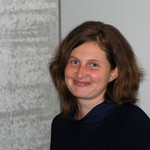
Professorship of Bavarian Regional History and European Regional History
Starting with the Free State of Bavaria and its historical territories in Old Bavaria, Franconia, Swabia and the Palatinate, as many topics as possible are covered across different eras. Research focuses on the early modern period and the 20th century, with particular emphasis on processes of internationalisation, cultural transfer and migration, as well as the phenomenon of the Baroque ‘construction boom’ in Bavaria.
Show more
Professor Thomas Kohl
Professorship for History of the European Middle Ages and its Cultures
The professorship's research focuses on Germany and France, borders and identities, microstudies on mentalities and social history, and the Investiture Controversy from a European perspective.
Show more
Professor Jessica Kreutz
Professorship of Historical Education and Public History
Research and teaching focus on areas such as coherence orientation and professional development in the training of history teachers, digital storytelling techniques in cultural history institutions, dealing with disinformation and digital (historical) sources.
Show more
Professor Jens Späth
Chair of Modern and Contemporary History
The chair's research focuses on European history since the late 18th century, particularly the history of Southern and Western Europe and the history of the Mediterranean region from a comparative, transfer and interconnection perspective. The Chair has a broad network of partner universities in Southern and Western Europe as well as the Max Weber Foundation – German Humanities Institutes Abroad.
Show more
Professor Oliver Stoll
Professorship in Ancient History
The focus of Ancient History in Passau includes the history of the Roman Empire, in particular that of the imperial military, economic and social history, religious history, and general history of the Roman provinces.
Show more
Professor Grischa Vercamer
Heisenberg Professorship: Chair of the History of Eastern and Central European…
During the first five years of DFG funding, the Heisenberg Professorship will focus specifically on the following projects: The late medieval prince as a “Christian ruler”, the late medieval prince as a warrior, military commander and warlord, living environments and transformation of the lower nobility in the Holy Roman Empire (14th-16th centuries). In addition to these projects, reference should be made to projects on the Teutonic Order in Prussia and an EU Interreg project (2024-2027) on Eger and Vogtland at Chemnitz University of Technology.
Research profil of the chair
Show more
Professor Thomas Wünsch
Chair of Modern and Contemporary History of Eastern Europe and its Cultures
Research focuses on the history and culture of Poland, Czechia, Ukraine, Russia, Central Asia and the Balkans. Current projects deal with the provincial councils of Poland, religious cultures of remembrance in Ukraine and the archival situation regarding Russian Germans. Our extensive network of partner universities in Eastern Central Europe and Eastern Europe, including Russia, as well as parts of Central Asia, can be used for both research and teaching.
Show more
Professor Stephanie Zehnle
Professorship of Environmental and Technological History
Global and (post)colonial environmental and technological history forms the framework for research into the complex relationship between humans, environments, animals and pathogens. Current focal points in colonial history examine human-wildlife relationships, agricultural colonialism and its consequences, and the emergence of zoonotic infectious diseases due to changes in ecological orders. This involves interdisciplinary cooperation both within the environmental humanities and with the natural and life sciences.
Show more
Share this page
Beim Anzeigen des Videos wird Ihre IP-Adresse an einen externen Server (Vimeo.com) gesendet.



 Share this page